
I have deep feelings about expertise. Real expertise. Earned expertise.
There’s a reason I narrowed my focus to serving experts when I rebranded my business. I’m tired of people claiming expertise they do not possess, and I’m tired of watching genuinely qualified people get overlooked in favour of those who simply know how to perform credibility well.
It sounds straightforward enough.
Or maybe it isn’t.
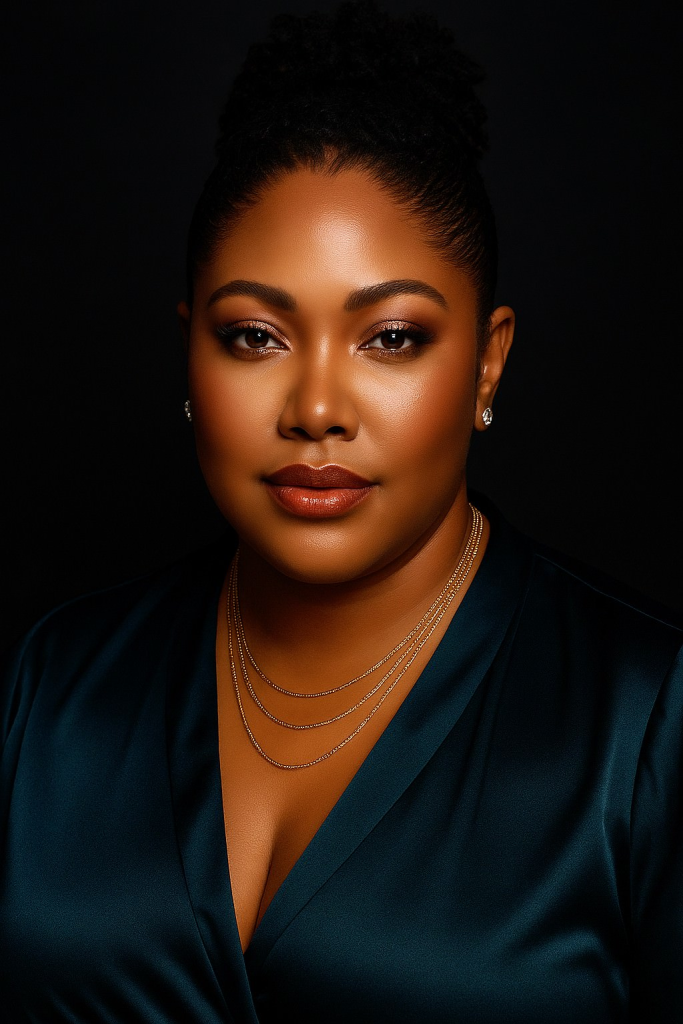
Over the past few weeks, I’ve been observing the discourse surrounding “Dr?” Cheyenne Bryant’s credentials (or lack thereof), and it has only reinforced my concerns about the widening gap between actual and perceived expertise.
Naturally, I had to dig deeper and dissect why it has become so easy for unqualified people to successfully position themselves as authorities.
Grifting 101
Fake experts do not rise in a vacuum. They thrive in cultures where intellectual rigour is treated as pretentious, expertise is viewed with suspicion, and confidence is mistaken for competence.
On one side, there’s a very effective grifting formula:
Project the right image + say the right words + gain proximity to the right people + exploit visibility = perceived expertise.
These fake experts understand positioning and perception exceptionally well. They understand aesthetics and presentation. They are brilliant at emotional persuasion. They have mastered confidence as performance.
More importantly, they understand their audience. They know exactly who is most likely to accept performative expertise without scrutiny.
The Sypmtoms of Anti-Intellectualism
Before anyone rushes to accuse me of being “elitist,” understand that I have tried to approach this subject thoughtfully and carefully. However, at some point, I have to call a spade a spade.
What we have been witnessing is not merely the rise of fake experts. It is the normalisation of anti-intellectualism disguised as “relatability,” “common sense,” and “hard truths.”
Anti-intellectualism is not simply questioning authority. It is the growing cultural instinct to distrust expertise, dismiss intellectual discipline, and treat informed analysis as arrogance or elitism.
I’ve watched legitimate criticism of “Dr?” Bryant’s positioning based on questionable credentials be dismissed as “hate” and “jealousy” by her supporters…including critiques made by licensed and credentialed mental health professionals.
That kind of low-level reasoning is symptomatic of the era we are living in. An era where emotional attachment often overrides intellectual evaluation…
Now, to be clear, people absolutely have the right to question institutions. Some level of skepticism is healthy. History has shown us countless examples of corruption, exclusion, elitism, and gatekeeping within academia and professional systems.
However, rejecting expertise altogether in favour of confidently delivered soundbites is another matter entirely. Confidence should never be confused with competence. Charisma should never outrank credentials. Virality should never become a substitute for verification.
Yet here we are.
“Dr?” Cheyenne Bryant is not an isolated case. Her popularity is a indicative of a much larger cultural problem. We’ve seen versions of this across the wellness industry, nutrition spaces, finance, entrepreneurship, and even medicine.
The pattern is always the same.
Discernment and Evaluating Expertise
Yet, real experts can usually identify these grifters almost immediately because trained professionals know how to evaluate substance beneath presentation. Once you apply critical thinking and peel back the compelling delivery, the depth often collapses under scrutiny.
But the average audience member is not assessing expertise at that level…and grifters know this.
Their audiences are often made up of people who evaluate authority through emotional resonance rather than intellectual rigour. People who think “a degree is just a piece of paper.” Those who distrust expertise while simultaneously seeking validation from charismatic personalities online. Folks who would reject their doctor’s advice in favour of a wellness influencer’s.
This is exactly what fake experts exploit. So they package half-truths with cinematic confidence. They simplify complex subjects into emotionally satisfying “takes” because their audience is evaluating delivery, not depth.
Real experts operate differently. They prioritise accuracy over performance. They understand nuance, context, variables, limitations, exceptions, and uncertainty. They know that responsible expertise often sounds more measured because reality itself is nuanced.
Unfortunately, nuance does not perform as well online as bold certainty does…and that distinction matters more than people realise.
Perceived Expertise and Misplaced Authority
The online world rewards performance faster than substance. Performative expertise is more visually appealing. More entertaining. More emotionally stimulating. More algorithm-friendly. Meanwhile, real experts are often quieter, more cautious, and more reluctant to oversimplify complicated truths.
When people are not equipped to properly assess expertise, they begin relying on proxies and signifiers instead:
- Confidence
- Aesthetics
- Audience size
- Visibility
- Associations
- Emotional resonance
- Proximity to influential people
In other words: positioning.
In many cases, the type of positioning that borders dangerously close to manipulation.
And before someone inevitably argues that “formal education doesn’t equal intelligence,” let me say this clearly: absolutely true. There are credentialed people who are incompetent. There are self-taught people who are brilliant. There are institutions that fail people every day.
But the existence of flawed experts does not suddenly make expertise meaningless. There are fields where actual expertise and credentials are simply non-negotiable.
The Dangers of Anti-Intellectualism
The growing culture of treating intellectual discipline and rigour as optional while elevating personalities who have mastered the performance of expertise genuinely concerns me. It creates an environment where being articulate is enough to be perceived as knowledgeable…Where saying something confidently matters more than whether it is true and verifiable…Where emotional appeal consistently overrides intellectual scrutiny.
That should concern all of us.
Many anti-intellectuals believe rejecting expertise makes them more empowered. I believe it often makes them more vulnerable to manipulation, misinformation, exploitation, and outright scamming. Grifters understand exactly how to weaponise emotional insecurity, distrust, resentment, and ignorance for influence and profit.
Final Thoughts
This is why I care so deeply about helping real experts position themselves more effectively. Actual expertise deserves visibility. Experts should not have to abandon integrity in order to become more influential and culturally relevant. It is entirely possible to leverage positioning, branding, and visibility ethically without compromising intellectual honesty in the process.
That is the work I care about.
If genuine experts continue hiding in the shadows while performative charlatans dominate public discourse, we should not be surprised when manipulation becomes more influential than truth.